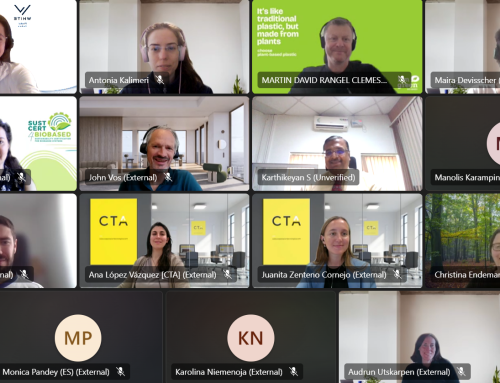
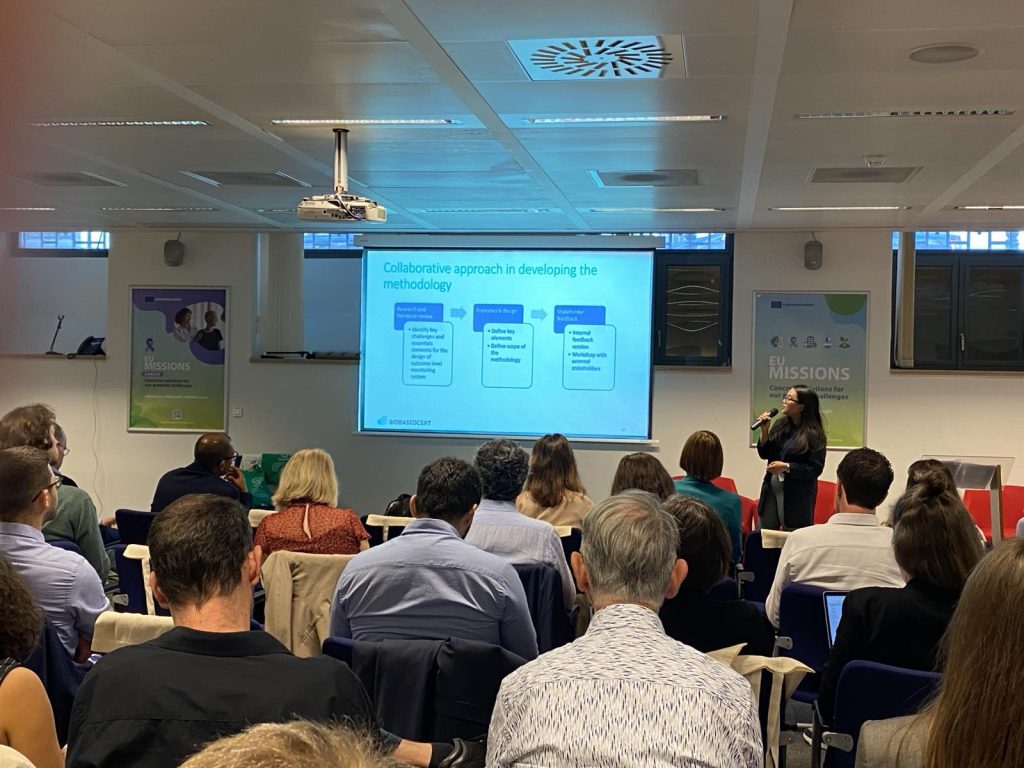
 On 13th May 2025, the BIOBASEDCERT Final Conference gathered more than 100 stakeholders, including policymakers, sustainability certification experts, researchers, and industry representatives, in Brussels for a full day dedicated to knowledge-sharing and discussion. Jointly organised by the STAR4BBS, SUSTCERT4BIOBASED, and HARMONITOR projects, the event marked the conclusion of three years of collaboration across the BIOBASEDCERT cluster.
The conference began with a welcome from Luana Ladu (TU Berlin), who introduced the agenda and outlined the key objectives of the day. Opening remarks were delivered by representatives of the European Commission and Stefania Rocca (European Research Executive Agency – REA), highlighting the importance of continued collaboration and alignment with EU policy. 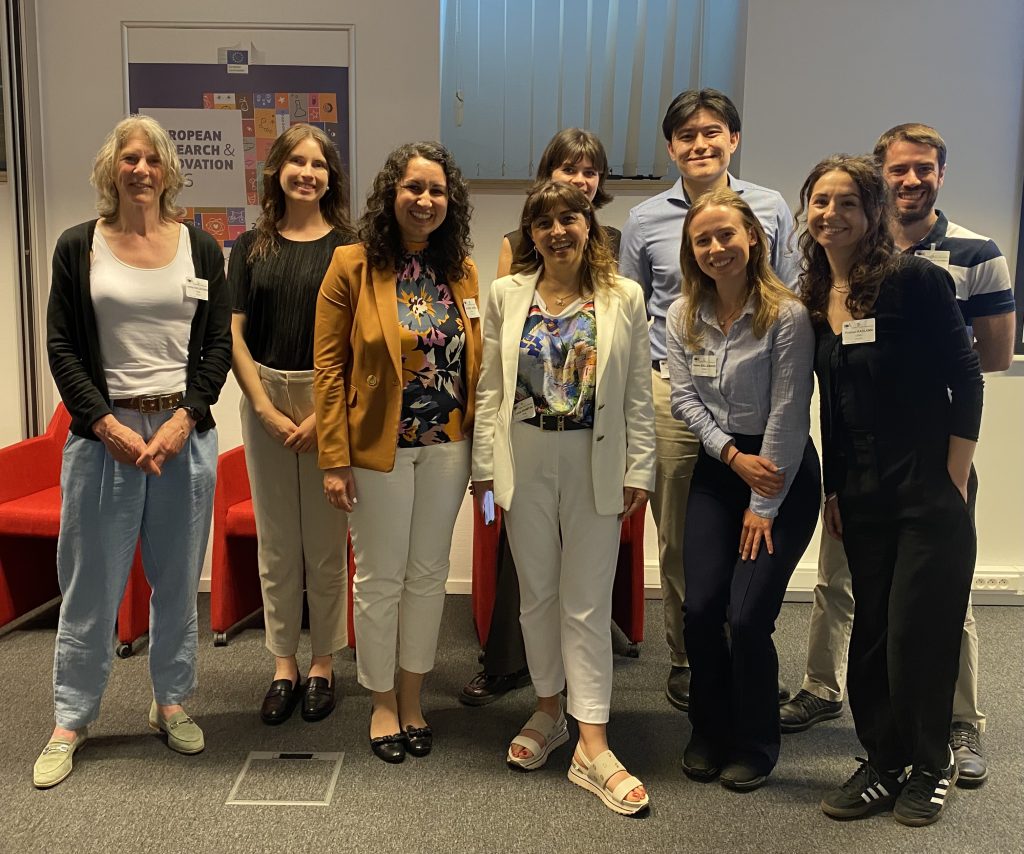
Session I focused on the BIOBASEDCERT Monitoring Tool (BMT), a tool designed to assess the effectiveness and robustness of certification schemes and labels. Presentations by Luana Ladu, Nikola Matović, Heleen Ballemans, and Maulidia Khairani presented the tools with different structures at system, content, and outcome levels, along with their methodology and testing phases. A panel discussion followed, with representatives from DG GROW, RSB, Nordic Swan, and UNCTAD discussing the BMT’s regulatory potential and possible role as a co-regulatory instrument in future EU frameworks.
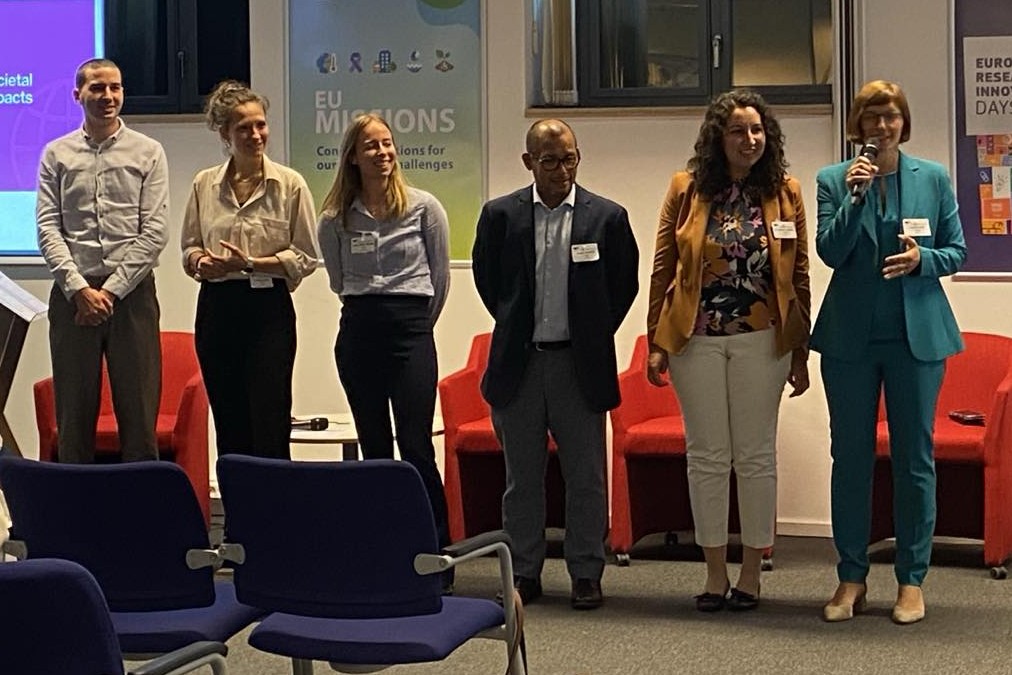 As we continued, a workshop on certification in the context of the Ecodesign for Sustainable Products Regulation (ESPR) and the Consumer Empowerment Directive followed. Moderated by Silvia Maltagliati (DG RTD), the session featured contributions from ISEAL, ECOS, BASF, and others, focusing on digital product passports, sustainability claims, and the alignment of innovation with regulatory developments in the bio-based sector.
Session II, moderated by Lara Dammer (Nova-Institut), discussed the impact of certification on global bio-based value chains. Presentations by Myrna van Leeuwen, Gabriela Lopez Camey, and Luciano Proto Cassina addressed key topics including sustainability, market access, and compliance. The session included an interactive activity, where participants discussed ongoing challenges and proposed potential solutions.
Session III, led by Birka Wicke (Radboud University), explored the feasibility of voluntary sustainability certification. Responsible partners for the Cost and Benefit Analysis presented research findings on the costs, benefits, and main barriers of certification schemes. A panel discussion followed, featuring a range of stakeholder perspectives and concluding with a Q&A session.
The final session summarised insights from throughout the day. It included highlights from the Projects4Future workshop, as well as key policy and platform recommendations. The session concluded with a summary of key messages from previous sessions and a discussion on future steps. 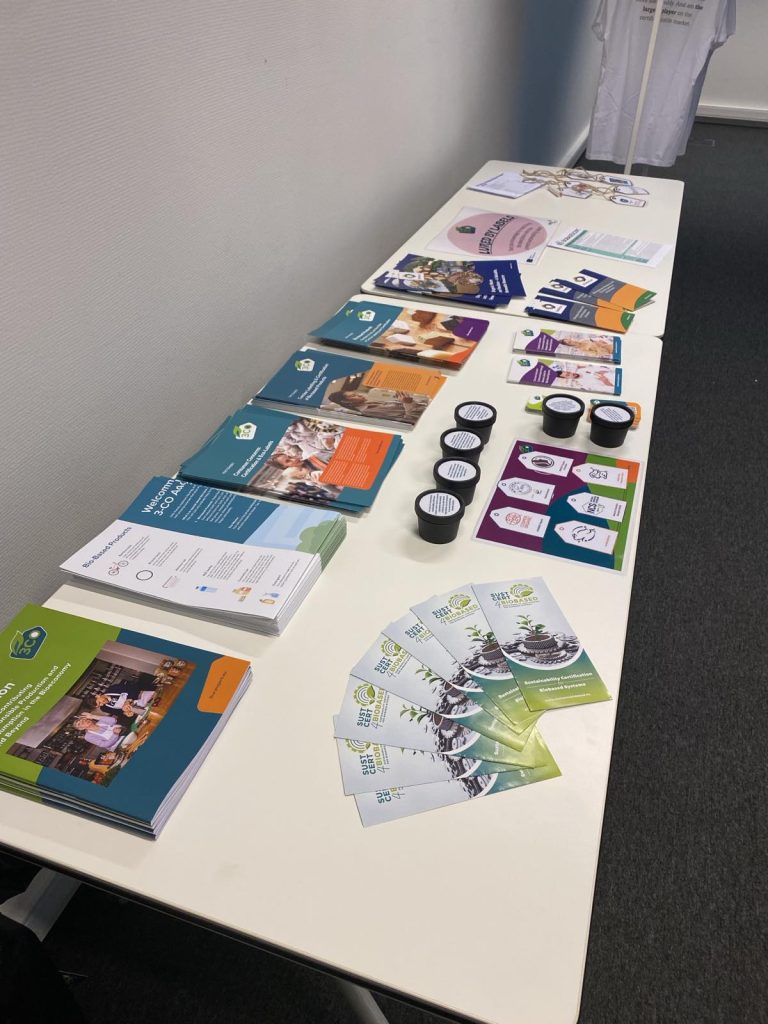
The conference ended with closing remarks from Luana Ladu and the other project coordinators, who thanked participants for their engagement and contributions. 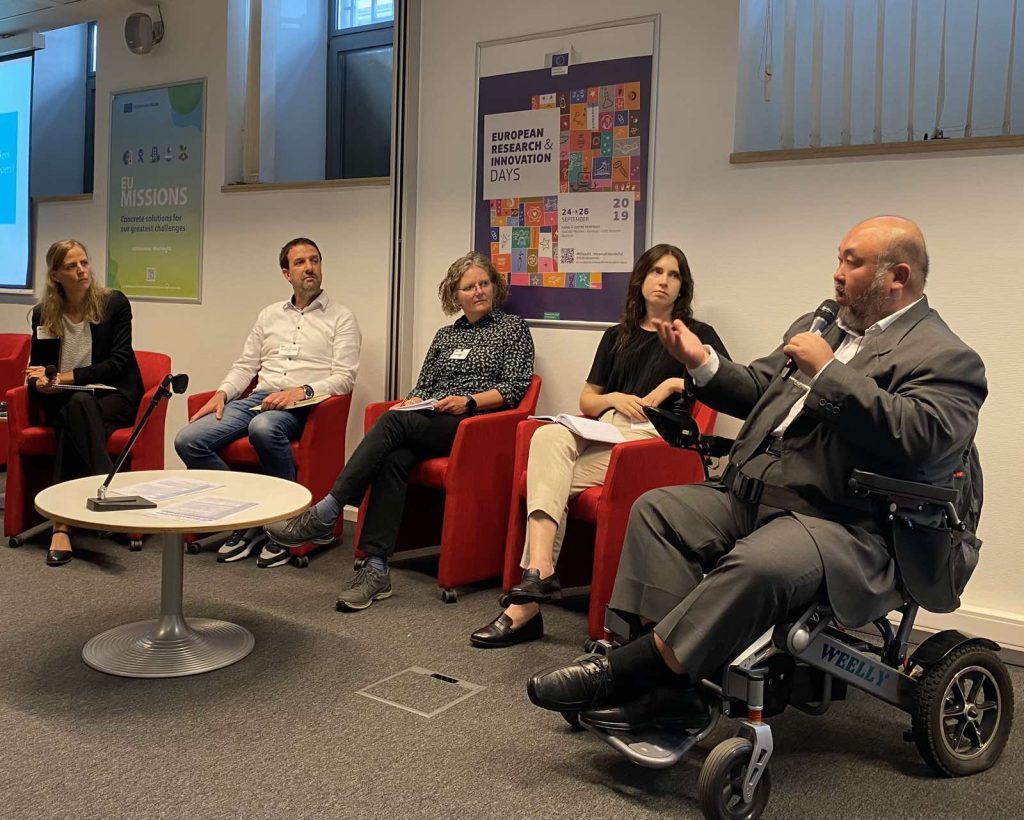
The day after, on 14th May 2025, a closed meeting was held among the sister projects, attended by the Project Officer. The discussion focused on the exploitation strategy for the Monitoring Tool, which has been developed as a joint asset of the STAR4BBS, SUSTCERT4BIOBASED, and HARMONITOR projects.
As SUSTCERT4BIOBASED concludes at the end of May, the BIOBASEDCERT Final Conference marked not only the end of the project but also the beginning of a continued journey in the field of sustainability certification. Over the past three years, the three sister projects—STAR4BBS, SUSTCERT4BIOBASED, and HARMONITOR—have conducted extensive research on certification-related developments, resulting in valuable insights and the creation of the BIOBASEDCERT Monitoring Tool (BMT).
Currently available in Excel format, the BMT is designed to support Certification Schemes and Labels (CSLs) and Certification Bodies to assess the robustness, comprehensiveness and effectiveness of existing CSLs applicable to bio-based products. Plans are underway to develop the tool into a user-friendly, web-based application, which will enable CSLs to evaluate their schemes more efficiently and effectively.
As Dissemination Managers of SUSTCERT4BIOBASED, we would like to thank everyone who participated in the event and supported us throughout this three-year journey. Your engagement and collaboration have been important in advancing the dialogue in sustainability certification-related discussions toward a more transparent and sustainable bio-based economy.